"Moms I'd Like To Surf" is a surf rock instrumental group out of France. They play a very unique brand of surf with chops to burn and a very funny sense of humor. They have recorded two EPs and last year released their first full length album, "Beach Control To Major Knob". Frankie Goodlord, the band's bassist, was kind enough to take some time and answer my questions about the band, their influences and the state of surf music in France.
ROCK N ROLL CASEY: Who are the members of the band and what do they play?
FRANKIE GOODLORD: All members of Moms are multi-instrumentalists. John John de Vito, our lead guitarist, is actually a sax player. Kristina Fabula, our baritonista, is a violinist. Bobby Ballard, our drummer, is a guitar and bass player. I have always played bass although I play guitar for composing. Our second album will be an occasion for adding additional instruments.
CASEY: Why Surf Music?
FRANKIE: We say it's because there is no singer, despite the fact there are three singers in the band. We wish to play without the constraint of vocals and what it imposes on the way of composing. We used to play within the standards of pop music composition and now we have the freedom to play only our own instruments and visit another way to create music. Moreover, surf music is a joy to play. It's fast sometimes brutal or intense. You are allowed to play on one string. It's an easy way to feel
something without putting notes all around. In music history, surf music has defined a lot of guitar techniques and influenced some of the genres which came after; psyche rock, hard rock or punk rock. There's another aspect we can mention; the sound of surf music. Of course, the first thing which comes to mind is reverb and the tremolo effect with a good Fender amp and a Jaguar Fender guitar. This is another standard in surf music. We are not totally into this vintage fetishism but we like the way we can produce dynamics and intensity without tons of pedals. It's definitely a live music genre which doesn't need a big musical production. It's all in the way you play.
CASEY: What bands or artists had an influence on you?
FRANKIE: For the classic era of surf music, we have to mention The Ventures, The Fender IV or The Atlantics. But we also like the orchestral surf tunes like Jack Nitzsche did. His version of "Man With The Golden Arm" is awesome. French movie music composer Raymond Lefevre, we covered "Jo" on our first album, or Claude Bolling, although they aren't part of the surf music universe. Some of us discovered surf music from Mike Patton of Mr. Bungle and the specific use of guitar techniques done by Trey Spruance on their third album, "California". Also, Frank Zappa. "Lemme Take You To The Beach" and "Take Your Clothes Off When You Dance" are awesome surf tunes. For the contemporary era, we appreciate Man Or Astro-Man, The Merman, Phantom Four and our favorite, Daikaiju. We played with them on their last European tour, it was terrific. More recently, we have been kicked off by the work of a band from Toronto, the New Shaker Sex Addicts. They have an eighties sound that sounds so fresh.
CASEY: Who is the main songwriter in the band?
FRANKIE: There's no main songwriter in Moms. Everyone brings demos made at home and the collective work focuses on arrangements and making better sounds together during rehearsals. The fact is, there are three professional musicians in Moms that play in several other bands, sometimes together. We must be organized as hell to find time to play together. That's why we don't lose time by composing together. For us, surf music is an occasion to mix different types of music together. We like to sound like a combination of classic surf, exotica, space age music and early garage rock.
CASEY: What is the music scene like in France?
FRANKIE: The French scene follows several waves of surf music like it seems to be in other countries, divided between traditionalist, punk or metal oriented. You can find followers of the classic era like the excellent Agamennonz and The Wave Chargers. One of our favorites is Arno de Cea and the Clockwork Wizards from Bordeaux, a kind of post-surf-punk trio with powerful energy and madness on stage. We also like Chemist and the Acevities and the Beach Moonsters both from Dijon.
CASEY: So many bands and musicians take themselves way too seriously, you include a lot of humor in your music, why?
FRANKIE: We are trying to answer Frank Zappa's question, 'Does humor belong in music?'. Since surf music is instrumental, the only way to make sense of it and tell a story is through song titles. This is where it comes into play, where you can create meaning and a new way of projecting yourself into an imagery of surf music like American mythology. Also, there is a desire for us to bring this surf culture to the second degree, even to the third, because in France it first evokes "Pulp Fiction" and not much else. It doesn't matter if we take ourselves too seriously, people always think we're a Shadows cover band for the older or a "Pulp Fiction" tribute for the younger. As we are in a niche market and we are not in it for the money, we may as well laugh at ourselves. It is even a little absurd today to believe that music can be something other than entertainment. When you are aware of this, you can feel free to create what you want and as we are still DIY, we can shout our loud, "Who cares?"
CASEY: Why do you think American roots music, surf, garage rock and blues, has become so popular in France and other parts of Europe? It is probably more popular overseas than in the States.
FRANKIE: I'm not sure surf music and garage rock are more popular in France than in the United States, even if we hope it is. I think the situation is different in Italy and Spain but I will know more after we have played there. On the other hand, I know that when we question our baby boomers and the older musicians we know, surf music has often been considered in France as funny or silly music. Imagine that; all of these riffs played in the treble. It seems less powerful and tough than the big riffs played in the bass as we find in rock or heavy metal. It also must be said that the mainstream European musical culture was less marked by jazz and exotica music and everything related to American instrumental music. The technicality of European musicians, as well as their harmonic mastery at the time, was not easy, especially for drummers. There was very little European surf
music in the sixties. The French "Yeye", the popular genre at the time, was more marked by rock n roll and variety singers. There is a whole mythology of American rock and English pop music in France which has marked many generations and which still remains significant today. But nowadays, something is happening with the vintage or nostalgia phenomena that you can find in all mass culture like in cinema, design, TV and, of course, music. The iconography and aesthetics of the fifties and sixties refer to something more authentic and less marked by technology and digitalization. The renewed interest in surf music comes from there, in my opinion. For our generation and for the general public, it was the Tarantino soundtracks which re-popularized the genre. For current musicians, I think it was mainly the punk bands from 1990-2000, or what we call the third wave of surf music, who helped bring surf music back. In France, groups like the Hawaii Samurai, The Irradiates and Demon Vendetta have rekindled the flame with a very wild sound and influences quite different from those of the sixties. This is why surf music in France also brings together many Hard Tech fans, punks, vintage hipsters, as well as, techno festival goers or boomers, who only know The Shadows and don't even know about Dick Dale. It is quite heterogeneous and is quite pleasant to watch from the stage.
CASEY: What projects does the band have coming up?
FRANKIE: We are deep in the DIY process. We make our own videos and we plan on making more videos for songs from "Beach Control To Major Knob". We are also composing our second album. It will have a more orchestral touch and we will continue to mix more of the music genres we love.
Recently while surfing through old music videos on YouTube, I came across a television appearance from the sixties by Spanky & Our Gang. The video is from some sixties TV show (“Hollywood Palace”I believe) Milton Berle introduces the band and Spanky and company begin lip syncing their latest hit “Make Every Minute Count” After the initial few seconds, the camera zooms in on the drummer who is wearing a giant cowboy hat with a feather attached to it. Actually, it’s not really a cowboy hat. It’s bigger and taller and was often worn by Native Americans in Westerns. It’s the type of hat Tom Laughlin wore in the Billy Jack movies. Anyway, the audience laughs and then the camera pans out to show the entire band again. Like many who saw that on television many years ago, I wondered, ‘Who is that guy?’ After seeing him in several other Spanky videos and doing some research on the internet I found out it was John “The Chief” Seiter.
The John Seiter File
Seiter was born in St.Louis, Missouri. He joined Spanky & Out Gang right after “Sunday Will Never Be The Same” became a hit. He played on three studio albums and a live album before the band split up. After that he played drums with The Turtles on their final album, “Wooden Head”.
Here is a clip of him performing with The Turtles on The Mike Douglas Show without his hat.
After The Turtles broke up he joined Rosebud a sort of super group with folk singer Judy Henske, former Lovin’ Spoonful member Jerry Yester, David Vaught and Henske’s future husband Chris Doerge who would become a very successful L.A session musician recording with Lee Hazelwood, Paul Williams and Linda Rondstadt and touting with Crosby, Stills & Nash, Jackson Browne and James Taylor.
Rosebud split up after only one album. Seiter became a session drummer most notably working on Tom Waits debut album, “Closing Time” which was produced by his old bandmate Jerry Yester. He also appeared on albums by Aztec Two-Step, Odetta and George Clinton.
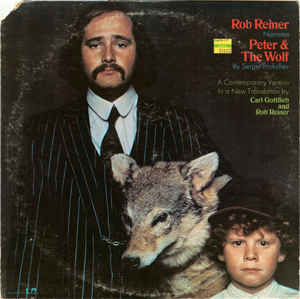
In 1972, he played drums and percussion on a recording of “Peter And The Wolf”. It was narrated by Rob Reiner who was riding high at the time due to “All In The Family” and it was produced by, once again, Jerry Yester. Seiter and Yester’s old bandmate David Vaught played bass thus reuniting 3/5ths of Rosebud. The album is a weird comic seventies take on the Prokofiev classic and worth checking out for a few bucks if you can find it.
Abner Jay was a one man blues man, gospel singer, corny joke teller and roads scholar. He called himself, “The Last Working Southern Black Minstrel” having performed professionally for over 65 years.
Cool & Interesting Facts About Abner Jay
—Jay began performing in 1926 at the age of five, playing guitar and banjo in medicine shows throughout the south.
—He traveled and performed with the Rabbit Foot Minstrels, a traveling tent show that toured the American south from the turn of the twentieth century until 1959. Ma Rainey, Bessie Smith, Brownie McGhee, Louis Jordan and Rufus Thomas were all a part of the troupe early in their careers.
—Abner had his own radio show on WMAZ out of Macon, Georgia from 1946-1956 playing and singing with the Macon Minstrels.
—He worked as a booking agent for Little Richard and James Brown and once managed Sister Rosetta Tharpe.
—During a brief residency in New York City he played the famous Apollo Theatre in Harlem.
—He performed for many years as a one man band, singing and accompanying himself on the six string banjo and drums. He released albums and cassette tapes on his own Brandie record label. His repertoire included blues songs, old gospel hymns, Stephen Foster songs and original tunes about a wide variety of subjects including Vietnam, drugs and jail. Needless to say, nobody sounds like Abner Jay.
—Abner Jay had sixteen children.
—He traveled the country playing shows out of a mobile home that opened up into a stage complete with “amplification and home furnishings.” He could literally play anywhere.
—Later in life, he performed regularly at the Stephen Foster Folk Culture State Park in White Springs Florida and at Tom Flynn’s Plantation Restaurant in Stone Mountain, Georgia.
—You can stream and download some of his music on Amazon, Spotify and Apple and there is some video footage on YouTube.
—Abner Jay died on November 4th, 1993 in Augusta Georgia. He was 72 years old.
—If anyone has any additional information on Abner’s life, feel free to contact me at,
rnrcasey@gmail.com.
Tom Elliot is the producer and host of The Twilight Zone Podcast. In the nine years since it's debut, Tom has produced nearly two hundred episodes of reviews, readings and interviews and last year won a Rondo award for 'Best Multi-Media Site'. The podcast is available for streaming on Apple, Stitcher, Podbean and many other sites and you can check out the show’s website at, thetwilightzonepodcast.com
Here is an interview I recently did with Tom where he waxes on all things Twilight Zone and gives us his top five episodes.
CASEY: Tell me about your early days.
TOM: I was born and bred in Liverpool in the U.K. Depending on what you are into, it's probably best known for either The Beatles or Liverpool Football Club. I've lived all over though, including the U.S. Watching shows like The Twilight Zone from a young age in a working class city like Liverpool contributed to my romanticized view of the U.S as the place where all the "big things" happen. My love affair with the United States started early and continues to this day.
CASEY: When did you start watching The Twilight Zone?
TOM: It was either back in the late eighties or early nineties when I was still a child. They used to put The Twilight Zone on at about two o'clock in the morning on one of the U.K channels. I used to stay up in those days because some of the best cult television was on at that time of the morning. It could be British shows like The Prisoner or classic Godzilla movies --all manner of good stuff was played in the small hours including The Twilight Zone.
I liked it because I'd never seen anything like it. It was such a mind expanding show. As a child who was used to stories going from A to B to C, it was such an eye opener to watch stories that went from A to B to X! And then when you grow up and watch the episodes again, you realize that there's a whole other level to them that you may have missed as a child.
CASEY: When did you start The Twilight Zone Podcast?
TOM: I started the Twilight Zone Podcast in late 2010. I had purchased all of the DVD sets but they sat on my shelf un-watched. At that point, I was doing a horror movie podcast (The Strange And Deadly Show) and reviewing DVDs for a website, so it was a case of me only watching what I was reviewing, so I decided to watch The Twilight Zone.
Initially, it was just going to be really short basic reviews lasting about fifteen minutes but, as time went on, I just fell in love with the show and the philosophy of Rod Serling. I couldn't discuss it on that basic level anymore. I had to dive in as deep as I could.
This obviously meant it was more work as I started to put more and more into the show but that is part of the enjoyment for me. Sometimes you begin to look at an episode which seems like any other run of the mill episode at the time but you discover that, actually, once you start digging you end up going down the rabbit hole. An episode like Dust would never be on anyone's top ten list but it has a story behind it like nothing else. I ended up doing a feature length episode on that one.
CASEY: You recently attended Serling Fest in New York, what was that like?
TOM: Serling Fest is a festival in Binghamton, New York, Rod Serling's hometown that's been held
Rod Serling
there for the last three years. As it was the sixtieth anniversary of the show, I made the effort to jump on a plane and cross the pond. It was three days of panels, talks and meet and greets with Twilight Zone authors.
I was lucky enough to take part in one of the panels at the event and was able to interview most of the guests for the podcast. I was also able to go and pay my respects to Rod Serling at his grave and I also met his daughter, Anne Serling, who I have been in touch with for several years. It was a great honor to do both things and it's only through doing the podcast that I've been able to have that opportunity.
CASEY: What do you think of the new Twilight Zone series?
TOM: It's been such a divisive thing but I understand it's actually been a hit for CBS All Access. I think often the hardcore fans in any fandom seem to be the ones who have the hardest time coming to terms with change, whereas, the more casual fans take just what they enjoy from things and get on with it. Strange as it may seem, considering I've spent the last ten years digging deep into The Twilight Zone, I'm more with the casual fans on this one. The thing is, nothing will ever match up to the original and, some will say they shouldn't even try bringing it back. I respect that view, even though I don't agree with it.
There's a lot of debate about the changes that have been made like episode length and broadcasting in color, but honestly, I don't really care about any of those things. My way of thinking is this; had The Twilight Zone not gone off the air in the sixties and carried on for decades, similar to Doctor Who, then the show would have naturally evolved. Serling may have stepped away from being so hands on and became producer and the executive producer and then walked away entirely. We would have eras of The Twilight Zone defined by show runners and creative teams the same way we have eras of Doctor Who and Star Trek. Quite rightly, fans would have their preferred eras or maybe they would still be of the mind that the first five seasons are the ones that count and that's absolutely fine.
So for me, what it does that's the same as the original Twilight Zone is the same enough. What it does differently is not so different that it's a deal breaker. I like the new show and I'm happy for it to exist as a companion to the original. It doesn't replace it nor is it intended to. I'm looking forward to what they do next.
CASEY: What are your top five episodes?
TOM: Top fives are always tough because they can change from day to day. I also must stress that I don't watch ahead in The Twilight Zone from where I go up to in the podcast. I'm currently near the end of season three, so there may be episodes in seasons four and five that would make the list.
5. The Monsters Are Due On Maple Street
Maple Street is the story of a group of neighbors who gradually start to turn on each other when strange things start to happen in their neighborhood. It's a classic take of humankind's propensity for turning on each other. There are themes of racism, scape-goating and it's as relevant now as when it was made. Required watching for not just Twilight Zone fans but human beings in general.
4. It's A Good Life
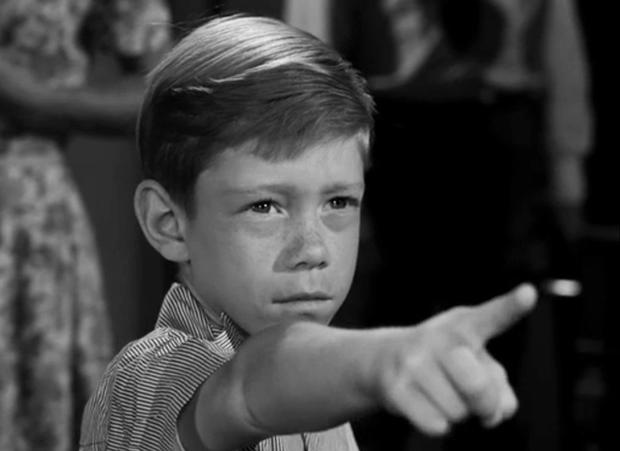
Serling was a very prolific writer of his own stories but some of his best work was actually adapting other people's stories. There are several instances of Rod Serling adapting a short story and improving it immensely. It's A Good Life is the story of Anthony Fremont, a boy with god-like powers and how the local community has to deal with that. The short story is very good in its own right but Serling distills its essence into one of the best Twilight Zones ever made.
3. Mirror Image
Sometimes Serling would abandon his usual M.O of cautionary or moral tales and just write weird stories. Mirror Image is the story of Millicent Barnes who keeps seeing a woman who looks exactly like her at the bus stop where she is waiting. It has a wonderful night time vibe about it. We've all been at a bus or train station at night when there are few people about and they take on a whole different aspect. Mirror Image takes that aspect and runs with it.
2. Shadow Play
Shadow Play is a Charles Beaumont written episode and it features a death row inmate who believes he is actually a man who goes to sleep each night and keeps having a recurring dream that he wakes up on death row on the day before his execution.
While Rod Serling often wrote cautionary tales, or tales with a strong moral core, Charles Beaumont was the master of writing stories that were just there to fracture your mind and Shadow Play is one of the best.
1. A Stop At Willoughby
One of Rod Serling's recurring themes was getting to a point in life where you start to look at where you are, what you are doing with your life and, perhaps, wondering what the point of it all is. In Willoughby, the main character is very much experiencing this to the point where whenever he falls asleep on the train on the way home from work, he wakes up in an idealized and idyllic American town called Willoughby. The ending is pretty dark and ahead of its time in terms of themes it is looking at but ultimately, it's one of those themes you grow into as an adult when you start to question these things yourself.
The Rock N Steins (pronounced Rock-N- Stines) are a rock n roll band out of Transylvania Heights, Ohio. The band features Casey Rock N Stein on vocals, guitar and harp and Cooper Rock N Stein on drums and percussion. They perform a mix of classic garage rock and weird original tunes about werewolves, gnomes, monsters and beer.
The Rock N Steins live at The Diamond Festival
The band is the result of a failed experiment by the renowned scientist Doctor Victor Von Rock N Stein. Working from his medieval castle high on a hill overlooking Transylvania Heights, his goal was to create the world’s greatest rock n roll band.
Dr. Victor Von Rock N Stein & “friend”
He initially created five musicians (using the body parts of dead musicians) but after hearing them perform for the first time, he pronounced the the experiment a total failure and ordered that all of the band members be destroyed. Casey and Cooper were able to escape certain death by jumping through a castle window and hiding in the dark forests that surround Transylvania Heights. Sadly, the other three members did not survive the night.
Since their escape, The Rock N Steins have been joyfully inflicting their unique brand of rock n roll on the unsuspecting and feeble minions of Transylvania Heights. You can listen to the band HERE. BYOB and crank it up!
A few years ago, I posted an entry to this blog called, The Tra-La-La Song Or Whatever Happened To N.B Winkless Jr.? . The basic premise of the post was that some guy named N.B Winkless Jr. wrote the Banana Splits Theme Song (actually co-written with Hoyt Curtin) and just who the hell was this dude anyway? I didn't learn much about him at the time but I did run across a book on Amazon called, The Gambling Times Guide To Craps written by a N.B Winkless Jr. and I thought, 'Could it be the same guy? Could the man who wrote the Tra-La-La Song also be an expert at the game of craps?'
I picked up the search for N.B Winkles Jr. a few weeks ago and after various twists and turns on the internet, I came across someone named Nels Winkless who works for a company called, Materialytics, LLC and, lo and behold, it turned out to be N.B's son.
Nels is the Communications Director at Materialytics and since 1985 has published a newsletter, The ABQ Correspondent, that explores the impact new technology has on society.
He was kind enough to fill me on his Father's life in advertising and his experience with The Banana Splits. In addition to the Tra-La-La Song, Nels informed me that his dad also wrote quite a few jingles for Kellogg's and some cartoon theme songs. (I've posted some of those below.) And, as it turns out, he actually did write a book on craps. Who would of thunk it?
CASEY: Tell me about your Father's early days.
NELS: My father was born in Chicago in 1913. The family moved to Milwaukee when he was young. His Dad, my Grandfather, was an insurance claims adjuster. In spite of being 5'7", he was an outstanding basketball player in high school. He wasn't big but he was crafty. He went to Riverside High School where he met my Mom, they were married at twenty. I'm the eldest of four sons. He went to the University Of Wisconsin in Madison and majored in Journalism, graduating mid-depression. He became a
N.B Winkless Jr.
newspaper reporter for the Pontiac Daily Leader in Illinois. I can still picture him wearing a fedora with his press card stuck in the band just like reporters in the movies--1938. Tough economic times and he went East to look for work and was hired as a copywriter by the William B. Remington Advertising Agency in Springfield, Massachusetts in 1939. ($130/month...promptly reduced by 10% in a general staff cut.) Remington had clients like Milton Bradley and Reising submachine guns. As a kid, I appeared in some ads for Milton Bradley (not for Reising) because I was available and cheap as a model. By 1943, he was a copywriter for Batten, Barton, Durstine and Osborn in Manhattan.
CASEY: What was your Dad's musical background?
NELS: None. I recall my Grandmother saying, to his annoyance, that he took some piano lessons but wouldn't practice. He didn't play the piano, just picked out tunes with one finger. He played a few chords on the ukulele. As a family, we used to sing a lot. When my brothers and I became adults, my brothers (Jeff, Terry, Dan) became pretty good on guitars. Mostly folk stuff but including a bit of classical Spanish guitar. My brother Jeff (1941-2006), who was Fleagle in the Banana Splits, actually had some technical musical skills and helped Dad on some of the trickier musical parts, for example, the Snap, Crackle, Pop jingle.
CASEY: How did he end up writing jingles?
NELS: He was a big time advertising copywriter working on big accounts (Armstrong Cork, Campbell's Soup, Phillip Morris, Kellogg's, MJB Coffee, Standard Oil Of California, Starkist Tuna, Pillsbury etc...) in major agencies and the need for jingles came up now and again. It turned out he had a knack for it, mostly a matter of rhythm and lyrics like, 'K-E double L O double Good...Kellogg's best for you'. He was a remarkable wordsmith and he enjoyed doing it, enjoyed working with people like Hoyt Curtin who would often polish/orchestrate his stuff for real use. I don't think he did a whole lot of jingles and songs. He wasn't primarily a song/jingle/music guy. I can't remember much but there was a thing for Kellogg's All-Stars performed by Cyril Ritchard, ('Who, Who the Wizard/The wonderful wizard/The wizard of oats'.) He did a couple of songs for The Banana Splits. The theme song and another on the record that made the charts in the U.K. He did a couple of songs that Homer & Jethro recorded. That got started when Homer & Jethro did a series of spots for Kellogg's Corn Flakes based on gags to which the response was, 'Oooo...that's corny.' I think he did the theme song for Magilla Gorilla.
CASEY: How did he get involved with The Banana Splits?
NELS: Longish story. Basically, Kellogg's sponsored some Hanna Barbera shows. In those days, sponsors were much more involved with the shows than they are now, with a lot more influence. Producers sold their shows to sponsors as much as to the networks and Dad got involved with Hanna Barbera on the creative side and liked it. The Banana Splits were not the first of those shows. Other examples included Dennis The Menace and The Beverly Hillbillies. In those days, the sponsor could do "integrated cast commercials" that looked like part of the show as long as the first twenty seconds of the plot made no mention of the product. For example, Jethro Clampett would come into breakfast exchanging comments with Granny and appreciate a bowl of Kellogg 's Corn Flakes. So Dad got to work with lots of producers, cast members and production folks. He became close friends of Bill Hanna who was an extremely nice guy. When The Banana Splits came along and they needed some young guys with stamina to work in the suits, Dad pointed to my brothers for three of them. I was seven years older than Jeff, the eldest of them, had lost the necessary zip, had a family and was busy with other things. Jeff was Fleagle, Terry was Bingo and Dan was Drooper.
CASEY: Did your brothers stay in show business?
NELS: Jeff (who died in 2006) was a journeyman Hollywood hand. A minor actor, he played the clerk who checked Edward G. Robinson into the recycling factory in Soylent Green. He was a working voice-over talent in lots of cartoons including the French Fries in McDonald's Happy Meals commercials for some years. A writer/editor who reworked a zillion Japanese cartoons for Saban turning them into material suitable for American TV and a composer who created some really nice electronic scores for a number of productions. He ran a little recording studio too.
Like Jeff, Terry stayed in the business becoming a screenwriter (The Howling) and a director. He became a specialist in making pictures for people like Roger Corman, very cheap production that was intended to look like more. I was always impressed that Ter could, and did, turn backflips in that caricature gorilla suit. He's still active in the business.
Dan had the good sense to get out of the business and became a computer programmer working for the U.S Geological Survey for many years until his recent retirement.
CASEY: Were you ever on the Banana Splits set?
NELS: Never on set but I spent an afternoon with them when they were shooting on location in San Francisco. Our then five year old daughter, Danielle, is in a shot with the critters, walking on the stone parapet around the Coit Tower. The shot was used in one of two or three alternate show openers that aired. The most impressive thing about that shoot was the brazen confidence of cameraman Fouad Said of Cinemobile who hustled them efficiently through the work. When I mentioned to Fouad that the traffic up to the Coit Tower was a mess and there was no parking, he just said, 'Follow me'. We followed his truck in a caravan of about five vehicles. Traffic is no problem if you drive the truck up the left side of the winding road forcing others out of the way and parking is no problem if you park on the sidewalk. A film crew can get away with almost anything. Some bystander asked what production company this was. Fouad pointed at the truck and said, 'Avis'.
CASEY: I ran across a book on Amazon called, The Gambling Times Guide To Craps by N.B Winkless Jr. Did your father write that?
NELS: Yeah, he wrote the book. People sometimes contact me wanting to talk to me about my book on craps and I have to explain. Basically he was a driven rather cranky guy. Very smart
and talented in some ways but he refused to follow conventions. He wasn't that much of a gambler and wasn't outstandingly good at it but the logic of it appealed to him. Calculating odds in his head were fun for him.
CASEY: What were his later years like?
He was fired by more than one agency, including Burnett, not because he wasn't producing prodigious amounts of good work but because he disrupted the official system while doing it. Copywriters were supposed to write commercials, get them approved and turn them over to the agency production people in Hollywood not produce it themselves. I remember he was writing a series of spots at the hotel at nights and working with a
N.B Winkless Jr.
half a dozen different producers like Fim Fair and Cascade to crank out the finished stuff. That was really upsetting to the establishment. He was sort of forcibly retired after some years of that but did a lot of freelance work. In 1976-78, I was the original editor of Personal Computing Magazine. Bill Gates, who was about nineteen, and Paul Allen wrote a column for us. Dad got interested in personal computers and began to write articles for computer magazines under his own name, which is my name. I complained that it looked as if the editor of Personal Computing was moonlighting by writing articles for the competition. He grudgingly switched to aliases, mostly Timothy Purinton.
"From ghosties and ghoulies and long leggedy beasties and things that go bump in the night, dear Lord, deliver us."
--An old Scottish prayer
Tis the season to be wary. As summer recedes into fall, the days grow shorter, the nights longer and the leaves begin falling from the trees. It is only September but you can already feel the change in the air, it's almost Halloween. My favorite time of year.
Even as a kid, I loved everything about the holiday. The colors;
oranges and browns and reds and yellows. The pumpkins, the costumes, the candy, The Great Pumpkin, The Wolfman, Frankenstein and the candy. (Did I mention the candy?),
As a child, I imagine Christmas was my favorite holiday. It makes sense, if you think about it from a ten year olds point of view. A bag full of candy is nice but a bicycle next to the Christmas tree beats a handful of Smarties any day of the week. It's economics. The season of getting.
As an adult, Halloween wins hands down. There is no pressure. Just have fun. Carve the pumpkin. Go to a party. Dress up like a moron. Hand out candy. Eat more candy than you hand out. And watch a few horror movies.
I do not watch horror movies through the majority of the year. From November through August I am just not interested. But September and October are a different story. Soon after Labor Day, I begin to get the itch.
Now when I mention horror movies, most people think I am
talking about scary movies. The Exorcist. The Shining. Psycho. Friday The 13th, Paranormal Activity etc...but nothing could be further from the truth. There is a difference between a horror movie and a scary movie. There is to me anyway and the difference can be summed up in one word.....fun.
I like fun. Fun is good. But being terrified, for me anyway, is not fun or good. When my sons were in high school, they enjoyed trying to get me to watch scary movies because they knew it would cause me discomfort and they found my discomfort highly amusing. They probably still do. I remember watching a movie called "The Fourth Kind" about alien abductions. The scene I remember most involved a screaming woman being dragged out of bed by aliens who were shouting things in ancient arabic. I didn't sleep for a week. This was not fun.
So what type of horror movies do I like? The old ones. The black and whites. The classics. The ones that haven't scared anyone since LBJ was President. But they are still a lot of fun to watch. So that being said, here are my top five Horror movies for Halloween that won't scare you at all. In fact, when you go to bed, you'll sleep like a baby.
5. The Ghost And Mr. Chicken Directer: Alan Rafkin Cast: Don Knotts, Joan Haley, Dick Sargent, Liam Redmond Release Date: January 26, 1966
Don Knotts plays Luther Hedges, a typesetter at a small town newspaper, who aspires to be a reporter. He agrees to spend the night at an alleged haunted house and write a story on the house for the paper. Hilarity ensues.
Yes, "The Ghost And Mr. Chicken" is a comedy. There is nothing even slightly scary in this movie, even by 1966 standards. But if you like the sort of slapstick humor Knotts sometimes did on the "Andy Griffith Show" you will enjoy this movie.
Weird & Interesting Facts
--There are a lot of connections between this movie and "The Andy Griffith Show". The idea for the plot came from an episode of "The Andy Griffith Show" called "The Haunted House". In addition to Don Knotts, three other actors from Mayberry appear in the show including Hal Smith (Otis Campbell), Hope Summers (Clara Edwards) and Burt Muslin (Judd Fletcher). The movie's director, Alan Rafkin, directed 27 episodes of the "Andy Griffith " while the screenwriting team of Everette Greenbaum and Jim Fitzell wrote 29 episodes of "Andy" along with the "The Ghost And Mr. Chicken" script.
--A slew of other sixties and seventies TV stars appear in the movie including Dick Sargent (the second Darren in Bewitched), Sandra Gold (the second Gladys Kravitz on Bewitched), Ellen Corby (Grandma Walton) and Charles Lane and James Millhollin (two names you probably don't recognize but who appeared in dozens of TV shows in the sixties and seventies.)
The Old Simmons Mansion
--The old Simmons Mansion, where Don Knotts spends the night, is located on Colonial Street on the Universal Studios lot in California. The house has also been filmed as the Dowd house in the 1950 Jimmy Stewart movie "Harvey" and as the home of Gabrielle Solis in "Desperate Housewives". The Munster house sits next door.
--Joan Staley, who plays Alma Parker, Don Knotts love interest, was Playboy's Miss November in a 1958 issue of the magazine. Normally a blonde, she wore a brunette wig in the movie to make her look more wholesome and less sexy.
--The musical score was written by Vic Mizzy who scored many TV shows in the sixties and seventies. He also wrote the theme songs for both The Adams Family and Green Acres.
--"The Ghost And Mr. Chicken' was shown at many theatres and drive-ins as a double feature with "Munsters Go Home". 4. The House On Haunted Hill Director: William Castle Cast: Vincent Price, Richard Long, Carol Ohmart Release Date: February 17, 1959
Vincent Price plays Frederick Loren an eccentric millionaire who invites five people to a haunted house party. The "party" takes place at an old abandoned mansion. Anyone who can spend the whole night at the house will be awarded $10,000. Though a B grade horror movie, it was probably fairly scary for 1959 but it is pretty corny and amusing by today's standards. The film contains a giant vat of acid in the cellar, a falling chandelier, a human head inside a suitcase, party favors that consist of loaded pistols in tiny coffins, two creepy servants named Mr. and Mrs. Slydes, a hanging, blood dripping from the ceiling, an organ that plays by itself, a homicidal skeleton and more. It is a fun movie and it wraps up in less than an hour and a half.
Weird & Interesting Facts
--The movie was directed by William Castle. Castle was known as "King Of The Gimmicks" because he always had some sort of gimmick or publicity stunt to help sell his movies. In the 1958 film "Macabre" he gave each movie goer a certificate for a $1000 life insurance policy from Lloyd's Of London in case they should die from fright while watching the movie. He also stationed women dressed like nurses in the lobby and parked hearses outside of the theatre. For "House On Haunted Hill" he had theatres rig up glow in the dark plastic skeletons to pulleys that would fly over the head of the audiences at the same time the skeleton appeared on screen. He called this effect Emergo and it worked, audiences loved it.
--Carolyn Craig plays Nora Manning, a young woman invited to stay overnight at the house for a chance to win the $10,000. Nora spends the entire movie terrified and helpless and screams so much through out the movie I couldn't help laughing each time she started to scream. On a sad note, Carolyn Craig died of a self inflicted gun shot wound in 1970. She was only 34 years old.
--Lance Schroeder, the suave young bachelor, is played by Richard Long. He was a very successful actor through the early seventies starring in "77 Sunset Strip", "Big Valley" and "The Nanny And The Professor". Long also died young. He passed away at the age of 47 in 1974 following a heart attack.
--The main reason to watch this movie is the performance of the great Vincent Price. The Merchant Of Menace plays Frederick Loren, the diabolical millionaire who puts this party together. As always, Price plays the part with grace, class and style and pronounces the word party as "pah-tee" throughout the movie, which is kind of cool.
--The exterior shots of the house were filmed at Ennis House located in Los Feliz, California. The house has been used in a number of movies and TV shows including "Blade Runner" and was filmed in several episodes of "Buffy The Vampire Slayer".
3. "Frankenstein" Director: James Whale Cast: Colin Clive, Mae Clark, Boris Karloff Release: November 21, 1931
A mad scientist decides to create a human being out of the parts of a dead human being. Very bad idea. Mayhem ensues. This is one of Universal's greatest horror flicks and it still holds up today. The sets and locations where the movie was filmed perfectly set up the gothic atmosphere. Boris Karloff, remarkably, makes the monster seem human. The scene where the father carrys his dead daughter into the village still gives me goose bumps.
Weird & Interesting Facts
--The movie is based on the 19th century novel written by eighteen year old Mary Shelley. It is considered by many to be the first science fiction novel.
--Director James Whale also directed the sequel, "Bride Of Frankenstein" and a number of other classic horror movies including, "The Old Dark House", "The Invisible Man" and "Dracula's Daughter".
--Boris Karoff's role as the monster was very physically demanding. The costume was bulky and difficult to move in and the boots were four inches high and weighed eleven pounds. He reprised the role of the monster in the sequal, "Bride Of Frankenstein" .
--Bela Lugosi was originally going to play the part of
Frankenstein 's monster but after several unsuccessful make up tests he quit the project. He would later play the monster in "Frankenstein Meets The Wolfman".
--Colin Clive, who played Dr. Victor Frankenstein, died at the age of 37 from tuberculosis. A chronic alcoholic, Clive was often intoxicated during filming. He was often seen napping on set and was sometimes so drunk that he had to be held upright for over the shoulder shots.
Dwight Frye As Fritz
--Dwight Frye played Victor Frankenstein's hunchbacked assistant Fritz. Frye acted in many horror films including, " Bride Of Frankenstein ", "Dracula", "The Invisible Man", "The Vampire Bat", "Son Of Frankenstein" and " Frankenstein Meets The Wolfman". Around Hollywood, he was known as, The Man With The Thousand Watt Stare and The Man Of A Thousand Deaths. Alice Cooper recorded a tribute to him called, " The Ballad of Dwight Fry".
--Other than the opening and final credits and a scene where a band plays, there is no musical soundtrack in the movie.
--The character of Frankenstein 's Monster has appeared in over sixty films, in addition to this one. The first was the 1910 silent era film, "Frankenstein" starring Charles Ogle as the monster and the latest was 2018s computer animated "Hotel Transylvania 3: Summer Vacation". Kevin James was the voice of the monster. In addition to Boris Karloff, the monster has been played by Bela Lugosi (" Frankenstein Meets The Wolfman"), Lon Chaney Jr. ("The Ghost Of Frankenstein"), Peter Boyle ( "Young Frankenstein"), Robert De Niro ( "The Creation") and Randy Quaid
( "Frankenstein" , a 1992 TV adaptation of the novel).
2. "The Wolfman" Directed by Curt Siodmak Cast: Lon Chaney Jr., Claude Raines, Evelyn Ankers December 12, 1941
"Even a man who is pure of heart and says his prayers by night, can become a wolf when the wolfbane blooms and the autumn moon is bright. "
I was first introduced to this movie as a kid growing up in Cleveland, Ohio. Every Friday night, the CBS affiliate had a local late night movie program called, "Hoolihan & Big Chuck". Hoolihan and Big Chuck were a couple of local TV personalities who hosted the show. In addition, to comedy skits and other local content, they always featured a full length movie and they often showed some of the old Universal classics, including this one.
Like "Frankenstein" , "The Wolfman" has great sets and loads of atmosphere. The woods and the fog, the Gypsy camp, Talbot Castle, the village. There is also a B-movie quality to a lot of the acting, the special effects are pretty dated and parts of the story don't make sense (The action seems to take place in Eastern Europe but some of the villagers have a strong British accent while some have an American accent and, other than the Gypsies, nobody has an Eastern European accent)
But it's fun to see Lon Chaney and Bela Lugosi in the same movie. Claude Raines is great and Maria Ouspenskaya steals the show as the Gypsy fortune teller.
Weird & Interesting Facts
--The poem that is recited throughout the movie ("Even a man who is pure of heart... ") was thought for many years to be an old ancient rhyme but was actually an invention of the screenwriter. When my kids were little, I would recite the poem anytime we were out in the woods or walking at night. It got to the point where all I would have to say were the first three words, "Even a man... " and they would freak out.
--Lon Chaney Jr. starred as The Wolf Man. Legend has that it took five to six hours to apply his make up and an hour to remove it. He reprised the role of The Wolf Man in four more films. Chaney was the only actor to play all four Universal monsters; The Wolfman, Frankenstein, Dracula and The Mummy.
Bela The Gypsy
--Bela Lugosi wanted to play the part of The Wolf Man but didn't get the role. He did however play the Gypsy fortune teller's son, Bela, who turns into a wolf and bites Lon Chaney. That is some kind of revenge, anyway.
--In a deleted scene, Lon Chaney wrestled a six hundred pound bear. The bear was kept chained to a pole on the set and once broke free and went after actress Evelyn Ankers who climbed up a ladder and was pulled up to a scaffold by an electrician. The bear was eventually subdued. 1. "The Tingler" Director: William Castle Cast: Vincent Price, Judith Evelyn, Daryl Hickman Release: July 29, 1959
Have you ever felt a tingling up your spine when you're very nervous or afraid? What causes that sensation? Is it simply your nerve endings or is it something more sinister?
That is the premise of this B-movie masterpiece. When I say masterpiece this movie has everything a great B horror movie should; a ludicrous plot, bad dialouge, lots of over-acting, a mad scientist and a cheesy looking monster (the tingler looks like a giant centipede). The most fun you will ever have watching a horror movie.
Best Line In The Movie:
"This silly pistol can make a hole in you the size of a medium grapefruit".
--Dr. Warren Chapin
(Vincent Price)
Weird & Interesting Facts
--Almost all of William Castle's movies had a gimmick and "The Tingler" is no exception. "Percepto" was a gimmick where Castle attached buzzers underneath several theatre seats. At different times during the movie, the buzzer would be activated giving the person sitting in the seat a tingling feeling. He also paid a movie goer to stand up, scream and faint and then be taken away on a stretcher. The highlight of the movie is when the action on the screen stops and Vincent Price addresses the audience directly and says, "Ladies and Gentlemen, the tingler is loose in the theatre! Scream, scream for your lives!" at which point The tingler is shown crawling across the screen. Then, just as abruptly, you hear Vincent Price's voice inform everyone that the tingler is gone and the movie returns to the story. This is fun to watch on your TV set at home but imagine how much fun it was to watch in a movie theatre. It must have been total bedlam.
--"The Tingler" is the first major motion picture to depict an acid trip. Vincent Price's character is shown reading a book called, "LSD: Fight Effects Induced by Injection of Lysergic Acid LSD25". Later In the movie, he injects a dose and does not have a good trip. Robb White, the screenwriter, had experimented with acid at UCLA. At the time LSD was still legal.
The Tingler
--Daryl Hickman played Price's lab assistant in the movie. He had been a child actor appearing in many TV shows and movies including, "Our Gang", "The Grapes Of Wrath" and "The Many Lives Of Dobie Gillis". He later married his co-star Pamela Lincoln who, incidentially, played his girlfriend in "The Tingler".
--As always, Vincent Price does a great job of rising above the material. You have to wonder what Price really thought of some of these crazy B horror movies he made. He seemed to be having fun making this one. Besides, it beats working for a living.