Tom Elliot is the producer and host of The Twilight Zone Podcast. In the nine years since it's debut, Tom has produced nearly two hundred episodes of reviews, readings and interviews and last year won a Rondo award for 'Best Multi-Media Site'. The podcast is available for streaming on Apple, Stitcher, Podbean and many other sites and you can check out the show’s website at, thetwilightzonepodcast.com
Here is an interview I recently did with Tom where he waxes on all things Twilight Zone and gives us his top five episodes.
CASEY: Tell me about your early days.
TOM: I was born and bred in Liverpool in the U.K. Depending on what you are into, it's probably best known for either The Beatles or Liverpool Football Club. I've lived all over though, including the U.S. Watching shows like The Twilight Zone from a young age in a working class city like Liverpool contributed to my romanticized view of the U.S as the place where all the "big things" happen. My love affair with the United States started early and continues to this day.
CASEY: When did you start watching The Twilight Zone?
TOM: It was either back in the late eighties or early nineties when I was still a child. They used to put The Twilight Zone on at about two o'clock in the morning on one of the U.K channels. I used to stay up in those days because some of the best cult television was on at that time of the morning. It could be British shows like The Prisoner or classic Godzilla movies --all manner of good stuff was played in the small hours including The Twilight Zone.
I liked it because I'd never seen anything like it. It was such a mind expanding show. As a child who was used to stories going from A to B to C, it was such an eye opener to watch stories that went from A to B to X! And then when you grow up and watch the episodes again, you realize that there's a whole other level to them that you may have missed as a child.
CASEY: When did you start The Twilight Zone Podcast?
TOM: I started the Twilight Zone Podcast in late 2010. I had purchased all of the DVD sets but they sat on my shelf un-watched. At that point, I was doing a horror movie podcast (The Strange And Deadly Show) and reviewing DVDs for a website, so it was a case of me only watching what I was reviewing, so I decided to watch The Twilight Zone.
Initially, it was just going to be really short basic reviews lasting about fifteen minutes but, as time went on, I just fell in love with the show and the philosophy of Rod Serling. I couldn't discuss it on that basic level anymore. I had to dive in as deep as I could.
This obviously meant it was more work as I started to put more and more into the show but that is part of the enjoyment for me. Sometimes you begin to look at an episode which seems like any other run of the mill episode at the time but you discover that, actually, once you start digging you end up going down the rabbit hole. An episode like Dust would never be on anyone's top ten list but it has a story behind it like nothing else. I ended up doing a feature length episode on that one.
CASEY: You recently attended Serling Fest in New York, what was that like?
TOM: Serling Fest is a festival in Binghamton, New York, Rod Serling's hometown that's been held
Rod Serling
there for the last three years. As it was the sixtieth anniversary of the show, I made the effort to jump on a plane and cross the pond. It was three days of panels, talks and meet and greets with Twilight Zone authors.
I was lucky enough to take part in one of the panels at the event and was able to interview most of the guests for the podcast. I was also able to go and pay my respects to Rod Serling at his grave and I also met his daughter, Anne Serling, who I have been in touch with for several years. It was a great honor to do both things and it's only through doing the podcast that I've been able to have that opportunity.
CASEY: What do you think of the new Twilight Zone series?
TOM: It's been such a divisive thing but I understand it's actually been a hit for CBS All Access. I think often the hardcore fans in any fandom seem to be the ones who have the hardest time coming to terms with change, whereas, the more casual fans take just what they enjoy from things and get on with it. Strange as it may seem, considering I've spent the last ten years digging deep into The Twilight Zone, I'm more with the casual fans on this one. The thing is, nothing will ever match up to the original and, some will say they shouldn't even try bringing it back. I respect that view, even though I don't agree with it.
There's a lot of debate about the changes that have been made like episode length and broadcasting in color, but honestly, I don't really care about any of those things. My way of thinking is this; had The Twilight Zone not gone off the air in the sixties and carried on for decades, similar to Doctor Who, then the show would have naturally evolved. Serling may have stepped away from being so hands on and became producer and the executive producer and then walked away entirely. We would have eras of The Twilight Zone defined by show runners and creative teams the same way we have eras of Doctor Who and Star Trek. Quite rightly, fans would have their preferred eras or maybe they would still be of the mind that the first five seasons are the ones that count and that's absolutely fine.
So for me, what it does that's the same as the original Twilight Zone is the same enough. What it does differently is not so different that it's a deal breaker. I like the new show and I'm happy for it to exist as a companion to the original. It doesn't replace it nor is it intended to. I'm looking forward to what they do next.
CASEY: What are your top five episodes?
TOM: Top fives are always tough because they can change from day to day. I also must stress that I don't watch ahead in The Twilight Zone from where I go up to in the podcast. I'm currently near the end of season three, so there may be episodes in seasons four and five that would make the list.
5. The Monsters Are Due On Maple Street
Maple Street is the story of a group of neighbors who gradually start to turn on each other when strange things start to happen in their neighborhood. It's a classic take of humankind's propensity for turning on each other. There are themes of racism, scape-goating and it's as relevant now as when it was made. Required watching for not just Twilight Zone fans but human beings in general.
4. It's A Good Life
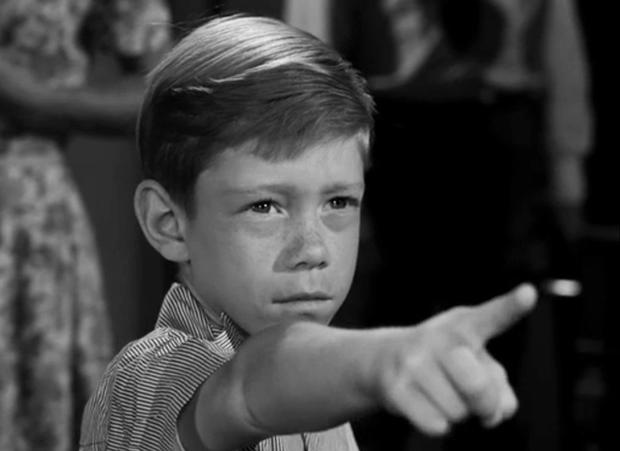
Serling was a very prolific writer of his own stories but some of his best work was actually adapting other people's stories. There are several instances of Rod Serling adapting a short story and improving it immensely. It's A Good Life is the story of Anthony Fremont, a boy with god-like powers and how the local community has to deal with that. The short story is very good in its own right but Serling distills its essence into one of the best Twilight Zones ever made.
3. Mirror Image
Sometimes Serling would abandon his usual M.O of cautionary or moral tales and just write weird stories. Mirror Image is the story of Millicent Barnes who keeps seeing a woman who looks exactly like her at the bus stop where she is waiting. It has a wonderful night time vibe about it. We've all been at a bus or train station at night when there are few people about and they take on a whole different aspect. Mirror Image takes that aspect and runs with it.
2. Shadow Play
Shadow Play is a Charles Beaumont written episode and it features a death row inmate who believes he is actually a man who goes to sleep each night and keeps having a recurring dream that he wakes up on death row on the day before his execution.
While Rod Serling often wrote cautionary tales, or tales with a strong moral core, Charles Beaumont was the master of writing stories that were just there to fracture your mind and Shadow Play is one of the best.
1. A Stop At Willoughby
One of Rod Serling's recurring themes was getting to a point in life where you start to look at where you are, what you are doing with your life and, perhaps, wondering what the point of it all is. In Willoughby, the main character is very much experiencing this to the point where whenever he falls asleep on the train on the way home from work, he wakes up in an idealized and idyllic American town called Willoughby. The ending is pretty dark and ahead of its time in terms of themes it is looking at but ultimately, it's one of those themes you grow into as an adult when you start to question these things yourself.
The Rock N Steins (pronounced Rock-N- Stines) are a rock n roll band out of Transylvania Heights, Ohio. The band features Casey Rock N Stein on vocals, guitar and harp and Cooper Rock N Stein on drums and percussion. They perform a mix of classic garage rock and weird original tunes about werewolves, gnomes, monsters and beer.
The Rock N Steins live at The Diamond Festival
The band is the result of a failed experiment by the renowned scientist Doctor Victor Von Rock N Stein. Working from his medieval castle high on a hill overlooking Transylvania Heights, his goal was to create the world’s greatest rock n roll band.
Dr. Victor Von Rock N Stein & “friend”
He initially created five musicians (using the body parts of dead musicians) but after hearing them perform for the first time, he pronounced the the experiment a total failure and ordered that all of the band members be destroyed. Casey and Cooper were able to escape certain death by jumping through a castle window and hiding in the dark forests that surround Transylvania Heights. Sadly, the other three members did not survive the night.
Since their escape, The Rock N Steins have been joyfully inflicting their unique brand of rock n roll on the unsuspecting and feeble minions of Transylvania Heights. You can listen to the band HERE. BYOB and crank it up!
A few years ago, I posted an entry to this blog called, The Tra-La-La Song Or Whatever Happened To N.B Winkless Jr.? . The basic premise of the post was that some guy named N.B Winkless Jr. wrote the Banana Splits Theme Song (actually co-written with Hoyt Curtin) and just who the hell was this dude anyway? I didn't learn much about him at the time but I did run across a book on Amazon called, The Gambling Times Guide To Craps written by a N.B Winkless Jr. and I thought, 'Could it be the same guy? Could the man who wrote the Tra-La-La Song also be an expert at the game of craps?'
I picked up the search for N.B Winkles Jr. a few weeks ago and after various twists and turns on the internet, I came across someone named Nels Winkless who works for a company called, Materialytics, LLC and, lo and behold, it turned out to be N.B's son.
Nels is the Communications Director at Materialytics and since 1985 has published a newsletter, The ABQ Correspondent, that explores the impact new technology has on society.
He was kind enough to fill me on his Father's life in advertising and his experience with The Banana Splits. In addition to the Tra-La-La Song, Nels informed me that his dad also wrote quite a few jingles for Kellogg's and some cartoon theme songs. (I've posted some of those below.) And, as it turns out, he actually did write a book on craps. Who would of thunk it?
CASEY: Tell me about your Father's early days.
NELS: My father was born in Chicago in 1913. The family moved to Milwaukee when he was young. His Dad, my Grandfather, was an insurance claims adjuster. In spite of being 5'7", he was an outstanding basketball player in high school. He wasn't big but he was crafty. He went to Riverside High School where he met my Mom, they were married at twenty. I'm the eldest of four sons. He went to the University Of Wisconsin in Madison and majored in Journalism, graduating mid-depression. He became a
N.B Winkless Jr.
newspaper reporter for the Pontiac Daily Leader in Illinois. I can still picture him wearing a fedora with his press card stuck in the band just like reporters in the movies--1938. Tough economic times and he went East to look for work and was hired as a copywriter by the William B. Remington Advertising Agency in Springfield, Massachusetts in 1939. ($130/month...promptly reduced by 10% in a general staff cut.) Remington had clients like Milton Bradley and Reising submachine guns. As a kid, I appeared in some ads for Milton Bradley (not for Reising) because I was available and cheap as a model. By 1943, he was a copywriter for Batten, Barton, Durstine and Osborn in Manhattan.
CASEY: What was your Dad's musical background?
NELS: None. I recall my Grandmother saying, to his annoyance, that he took some piano lessons but wouldn't practice. He didn't play the piano, just picked out tunes with one finger. He played a few chords on the ukulele. As a family, we used to sing a lot. When my brothers and I became adults, my brothers (Jeff, Terry, Dan) became pretty good on guitars. Mostly folk stuff but including a bit of classical Spanish guitar. My brother Jeff (1941-2006), who was Fleagle in the Banana Splits, actually had some technical musical skills and helped Dad on some of the trickier musical parts, for example, the Snap, Crackle, Pop jingle.
CASEY: How did he end up writing jingles?
NELS: He was a big time advertising copywriter working on big accounts (Armstrong Cork, Campbell's Soup, Phillip Morris, Kellogg's, MJB Coffee, Standard Oil Of California, Starkist Tuna, Pillsbury etc...) in major agencies and the need for jingles came up now and again. It turned out he had a knack for it, mostly a matter of rhythm and lyrics like, 'K-E double L O double Good...Kellogg's best for you'. He was a remarkable wordsmith and he enjoyed doing it, enjoyed working with people like Hoyt Curtin who would often polish/orchestrate his stuff for real use. I don't think he did a whole lot of jingles and songs. He wasn't primarily a song/jingle/music guy. I can't remember much but there was a thing for Kellogg's All-Stars performed by Cyril Ritchard, ('Who, Who the Wizard/The wonderful wizard/The wizard of oats'.) He did a couple of songs for The Banana Splits. The theme song and another on the record that made the charts in the U.K. He did a couple of songs that Homer & Jethro recorded. That got started when Homer & Jethro did a series of spots for Kellogg's Corn Flakes based on gags to which the response was, 'Oooo...that's corny.' I think he did the theme song for Magilla Gorilla.
CASEY: How did he get involved with The Banana Splits?
NELS: Longish story. Basically, Kellogg's sponsored some Hanna Barbera shows. In those days, sponsors were much more involved with the shows than they are now, with a lot more influence. Producers sold their shows to sponsors as much as to the networks and Dad got involved with Hanna Barbera on the creative side and liked it. The Banana Splits were not the first of those shows. Other examples included Dennis The Menace and The Beverly Hillbillies. In those days, the sponsor could do "integrated cast commercials" that looked like part of the show as long as the first twenty seconds of the plot made no mention of the product. For example, Jethro Clampett would come into breakfast exchanging comments with Granny and appreciate a bowl of Kellogg 's Corn Flakes. So Dad got to work with lots of producers, cast members and production folks. He became close friends of Bill Hanna who was an extremely nice guy. When The Banana Splits came along and they needed some young guys with stamina to work in the suits, Dad pointed to my brothers for three of them. I was seven years older than Jeff, the eldest of them, had lost the necessary zip, had a family and was busy with other things. Jeff was Fleagle, Terry was Bingo and Dan was Drooper.
CASEY: Did your brothers stay in show business?
NELS: Jeff (who died in 2006) was a journeyman Hollywood hand. A minor actor, he played the clerk who checked Edward G. Robinson into the recycling factory in Soylent Green. He was a working voice-over talent in lots of cartoons including the French Fries in McDonald's Happy Meals commercials for some years. A writer/editor who reworked a zillion Japanese cartoons for Saban turning them into material suitable for American TV and a composer who created some really nice electronic scores for a number of productions. He ran a little recording studio too.
Like Jeff, Terry stayed in the business becoming a screenwriter (The Howling) and a director. He became a specialist in making pictures for people like Roger Corman, very cheap production that was intended to look like more. I was always impressed that Ter could, and did, turn backflips in that caricature gorilla suit. He's still active in the business.
Dan had the good sense to get out of the business and became a computer programmer working for the U.S Geological Survey for many years until his recent retirement.
CASEY: Were you ever on the Banana Splits set?
NELS: Never on set but I spent an afternoon with them when they were shooting on location in San Francisco. Our then five year old daughter, Danielle, is in a shot with the critters, walking on the stone parapet around the Coit Tower. The shot was used in one of two or three alternate show openers that aired. The most impressive thing about that shoot was the brazen confidence of cameraman Fouad Said of Cinemobile who hustled them efficiently through the work. When I mentioned to Fouad that the traffic up to the Coit Tower was a mess and there was no parking, he just said, 'Follow me'. We followed his truck in a caravan of about five vehicles. Traffic is no problem if you drive the truck up the left side of the winding road forcing others out of the way and parking is no problem if you park on the sidewalk. A film crew can get away with almost anything. Some bystander asked what production company this was. Fouad pointed at the truck and said, 'Avis'.
CASEY: I ran across a book on Amazon called, The Gambling Times Guide To Craps by N.B Winkless Jr. Did your father write that?
NELS: Yeah, he wrote the book. People sometimes contact me wanting to talk to me about my book on craps and I have to explain. Basically he was a driven rather cranky guy. Very smart
and talented in some ways but he refused to follow conventions. He wasn't that much of a gambler and wasn't outstandingly good at it but the logic of it appealed to him. Calculating odds in his head were fun for him.
CASEY: What were his later years like?
He was fired by more than one agency, including Burnett, not because he wasn't producing prodigious amounts of good work but because he disrupted the official system while doing it. Copywriters were supposed to write commercials, get them approved and turn them over to the agency production people in Hollywood not produce it themselves. I remember he was writing a series of spots at the hotel at nights and working with a
N.B Winkless Jr.
half a dozen different producers like Fim Fair and Cascade to crank out the finished stuff. That was really upsetting to the establishment. He was sort of forcibly retired after some years of that but did a lot of freelance work. In 1976-78, I was the original editor of Personal Computing Magazine. Bill Gates, who was about nineteen, and Paul Allen wrote a column for us. Dad got interested in personal computers and began to write articles for computer magazines under his own name, which is my name. I complained that it looked as if the editor of Personal Computing was moonlighting by writing articles for the competition. He grudgingly switched to aliases, mostly Timothy Purinton.
"From ghosties and ghoulies and long leggedy beasties and things that go bump in the night, dear Lord, deliver us."
--An old Scottish prayer
Tis the season to be wary. As summer recedes into fall, the days grow shorter, the nights longer and the leaves begin falling from the trees. It is only September but you can already feel the change in the air, it's almost Halloween. My favorite time of year.
Even as a kid, I loved everything about the holiday. The colors;
oranges and browns and reds and yellows. The pumpkins, the costumes, the candy, The Great Pumpkin, The Wolfman, Frankenstein and the candy. (Did I mention the candy?),
As a child, I imagine Christmas was my favorite holiday. It makes sense, if you think about it from a ten year olds point of view. A bag full of candy is nice but a bicycle next to the Christmas tree beats a handful of Smarties any day of the week. It's economics. The season of getting.
As an adult, Halloween wins hands down. There is no pressure. Just have fun. Carve the pumpkin. Go to a party. Dress up like a moron. Hand out candy. Eat more candy than you hand out. And watch a few horror movies.
I do not watch horror movies through the majority of the year. From November through August I am just not interested. But September and October are a different story. Soon after Labor Day, I begin to get the itch.
Now when I mention horror movies, most people think I am
talking about scary movies. The Exorcist. The Shining. Psycho. Friday The 13th, Paranormal Activity etc...but nothing could be further from the truth. There is a difference between a horror movie and a scary movie. There is to me anyway and the difference can be summed up in one word.....fun.
I like fun. Fun is good. But being terrified, for me anyway, is not fun or good. When my sons were in high school, they enjoyed trying to get me to watch scary movies because they knew it would cause me discomfort and they found my discomfort highly amusing. They probably still do. I remember watching a movie called "The Fourth Kind" about alien abductions. The scene I remember most involved a screaming woman being dragged out of bed by aliens who were shouting things in ancient arabic. I didn't sleep for a week. This was not fun.
So what type of horror movies do I like? The old ones. The black and whites. The classics. The ones that haven't scared anyone since LBJ was President. But they are still a lot of fun to watch. So that being said, here are my top five Horror movies for Halloween that won't scare you at all. In fact, when you go to bed, you'll sleep like a baby.
5. The Ghost And Mr. Chicken Directer: Alan Rafkin Cast: Don Knotts, Joan Haley, Dick Sargent, Liam Redmond Release Date: January 26, 1966
Don Knotts plays Luther Hedges, a typesetter at a small town newspaper, who aspires to be a reporter. He agrees to spend the night at an alleged haunted house and write a story on the house for the paper. Hilarity ensues.
Yes, "The Ghost And Mr. Chicken" is a comedy. There is nothing even slightly scary in this movie, even by 1966 standards. But if you like the sort of slapstick humor Knotts sometimes did on the "Andy Griffith Show" you will enjoy this movie.
Weird & Interesting Facts
--There are a lot of connections between this movie and "The Andy Griffith Show". The idea for the plot came from an episode of "The Andy Griffith Show" called "The Haunted House". In addition to Don Knotts, three other actors from Mayberry appear in the show including Hal Smith (Otis Campbell), Hope Summers (Clara Edwards) and Burt Muslin (Judd Fletcher). The movie's director, Alan Rafkin, directed 27 episodes of the "Andy Griffith " while the screenwriting team of Everette Greenbaum and Jim Fitzell wrote 29 episodes of "Andy" along with the "The Ghost And Mr. Chicken" script.
--A slew of other sixties and seventies TV stars appear in the movie including Dick Sargent (the second Darren in Bewitched), Sandra Gold (the second Gladys Kravitz on Bewitched), Ellen Corby (Grandma Walton) and Charles Lane and James Millhollin (two names you probably don't recognize but who appeared in dozens of TV shows in the sixties and seventies.)
The Old Simmons Mansion
--The old Simmons Mansion, where Don Knotts spends the night, is located on Colonial Street on the Universal Studios lot in California. The house has also been filmed as the Dowd house in the 1950 Jimmy Stewart movie "Harvey" and as the home of Gabrielle Solis in "Desperate Housewives". The Munster house sits next door.
--Joan Staley, who plays Alma Parker, Don Knotts love interest, was Playboy's Miss November in a 1958 issue of the magazine. Normally a blonde, she wore a brunette wig in the movie to make her look more wholesome and less sexy.
--The musical score was written by Vic Mizzy who scored many TV shows in the sixties and seventies. He also wrote the theme songs for both The Adams Family and Green Acres.
--"The Ghost And Mr. Chicken' was shown at many theatres and drive-ins as a double feature with "Munsters Go Home". 4. The House On Haunted Hill Director: William Castle Cast: Vincent Price, Richard Long, Carol Ohmart Release Date: February 17, 1959
Vincent Price plays Frederick Loren an eccentric millionaire who invites five people to a haunted house party. The "party" takes place at an old abandoned mansion. Anyone who can spend the whole night at the house will be awarded $10,000. Though a B grade horror movie, it was probably fairly scary for 1959 but it is pretty corny and amusing by today's standards. The film contains a giant vat of acid in the cellar, a falling chandelier, a human head inside a suitcase, party favors that consist of loaded pistols in tiny coffins, two creepy servants named Mr. and Mrs. Slydes, a hanging, blood dripping from the ceiling, an organ that plays by itself, a homicidal skeleton and more. It is a fun movie and it wraps up in less than an hour and a half.
Weird & Interesting Facts
--The movie was directed by William Castle. Castle was known as "King Of The Gimmicks" because he always had some sort of gimmick or publicity stunt to help sell his movies. In the 1958 film "Macabre" he gave each movie goer a certificate for a $1000 life insurance policy from Lloyd's Of London in case they should die from fright while watching the movie. He also stationed women dressed like nurses in the lobby and parked hearses outside of the theatre. For "House On Haunted Hill" he had theatres rig up glow in the dark plastic skeletons to pulleys that would fly over the head of the audiences at the same time the skeleton appeared on screen. He called this effect Emergo and it worked, audiences loved it.
--Carolyn Craig plays Nora Manning, a young woman invited to stay overnight at the house for a chance to win the $10,000. Nora spends the entire movie terrified and helpless and screams so much through out the movie I couldn't help laughing each time she started to scream. On a sad note, Carolyn Craig died of a self inflicted gun shot wound in 1970. She was only 34 years old.
--Lance Schroeder, the suave young bachelor, is played by Richard Long. He was a very successful actor through the early seventies starring in "77 Sunset Strip", "Big Valley" and "The Nanny And The Professor". Long also died young. He passed away at the age of 47 in 1974 following a heart attack.
--The main reason to watch this movie is the performance of the great Vincent Price. The Merchant Of Menace plays Frederick Loren, the diabolical millionaire who puts this party together. As always, Price plays the part with grace, class and style and pronounces the word party as "pah-tee" throughout the movie, which is kind of cool.
--The exterior shots of the house were filmed at Ennis House located in Los Feliz, California. The house has been used in a number of movies and TV shows including "Blade Runner" and was filmed in several episodes of "Buffy The Vampire Slayer".
3. "Frankenstein" Director: James Whale Cast: Colin Clive, Mae Clark, Boris Karloff Release: November 21, 1931
A mad scientist decides to create a human being out of the parts of a dead human being. Very bad idea. Mayhem ensues. This is one of Universal's greatest horror flicks and it still holds up today. The sets and locations where the movie was filmed perfectly set up the gothic atmosphere. Boris Karloff, remarkably, makes the monster seem human. The scene where the father carrys his dead daughter into the village still gives me goose bumps.
Weird & Interesting Facts
--The movie is based on the 19th century novel written by eighteen year old Mary Shelley. It is considered by many to be the first science fiction novel.
--Director James Whale also directed the sequel, "Bride Of Frankenstein" and a number of other classic horror movies including, "The Old Dark House", "The Invisible Man" and "Dracula's Daughter".
--Boris Karoff's role as the monster was very physically demanding. The costume was bulky and difficult to move in and the boots were four inches high and weighed eleven pounds. He reprised the role of the monster in the sequal, "Bride Of Frankenstein" .
--Bela Lugosi was originally going to play the part of
Frankenstein 's monster but after several unsuccessful make up tests he quit the project. He would later play the monster in "Frankenstein Meets The Wolfman".
--Colin Clive, who played Dr. Victor Frankenstein, died at the age of 37 from tuberculosis. A chronic alcoholic, Clive was often intoxicated during filming. He was often seen napping on set and was sometimes so drunk that he had to be held upright for over the shoulder shots.
Dwight Frye As Fritz
--Dwight Frye played Victor Frankenstein's hunchbacked assistant Fritz. Frye acted in many horror films including, " Bride Of Frankenstein ", "Dracula", "The Invisible Man", "The Vampire Bat", "Son Of Frankenstein" and " Frankenstein Meets The Wolfman". Around Hollywood, he was known as, The Man With The Thousand Watt Stare and The Man Of A Thousand Deaths. Alice Cooper recorded a tribute to him called, " The Ballad of Dwight Fry".
--Other than the opening and final credits and a scene where a band plays, there is no musical soundtrack in the movie.
--The character of Frankenstein 's Monster has appeared in over sixty films, in addition to this one. The first was the 1910 silent era film, "Frankenstein" starring Charles Ogle as the monster and the latest was 2018s computer animated "Hotel Transylvania 3: Summer Vacation". Kevin James was the voice of the monster. In addition to Boris Karloff, the monster has been played by Bela Lugosi (" Frankenstein Meets The Wolfman"), Lon Chaney Jr. ("The Ghost Of Frankenstein"), Peter Boyle ( "Young Frankenstein"), Robert De Niro ( "The Creation") and Randy Quaid
( "Frankenstein" , a 1992 TV adaptation of the novel).
2. "The Wolfman" Directed by Curt Siodmak Cast: Lon Chaney Jr., Claude Raines, Evelyn Ankers December 12, 1941
"Even a man who is pure of heart and says his prayers by night, can become a wolf when the wolfbane blooms and the autumn moon is bright. "
I was first introduced to this movie as a kid growing up in Cleveland, Ohio. Every Friday night, the CBS affiliate had a local late night movie program called, "Hoolihan & Big Chuck". Hoolihan and Big Chuck were a couple of local TV personalities who hosted the show. In addition, to comedy skits and other local content, they always featured a full length movie and they often showed some of the old Universal classics, including this one.
Like "Frankenstein" , "The Wolfman" has great sets and loads of atmosphere. The woods and the fog, the Gypsy camp, Talbot Castle, the village. There is also a B-movie quality to a lot of the acting, the special effects are pretty dated and parts of the story don't make sense (The action seems to take place in Eastern Europe but some of the villagers have a strong British accent while some have an American accent and, other than the Gypsies, nobody has an Eastern European accent)
But it's fun to see Lon Chaney and Bela Lugosi in the same movie. Claude Raines is great and Maria Ouspenskaya steals the show as the Gypsy fortune teller.
Weird & Interesting Facts
--The poem that is recited throughout the movie ("Even a man who is pure of heart... ") was thought for many years to be an old ancient rhyme but was actually an invention of the screenwriter. When my kids were little, I would recite the poem anytime we were out in the woods or walking at night. It got to the point where all I would have to say were the first three words, "Even a man... " and they would freak out.
--Lon Chaney Jr. starred as The Wolf Man. Legend has that it took five to six hours to apply his make up and an hour to remove it. He reprised the role of The Wolf Man in four more films. Chaney was the only actor to play all four Universal monsters; The Wolfman, Frankenstein, Dracula and The Mummy.
Bela The Gypsy
--Bela Lugosi wanted to play the part of The Wolf Man but didn't get the role. He did however play the Gypsy fortune teller's son, Bela, who turns into a wolf and bites Lon Chaney. That is some kind of revenge, anyway.
--In a deleted scene, Lon Chaney wrestled a six hundred pound bear. The bear was kept chained to a pole on the set and once broke free and went after actress Evelyn Ankers who climbed up a ladder and was pulled up to a scaffold by an electrician. The bear was eventually subdued. 1. "The Tingler" Director: William Castle Cast: Vincent Price, Judith Evelyn, Daryl Hickman Release: July 29, 1959
Have you ever felt a tingling up your spine when you're very nervous or afraid? What causes that sensation? Is it simply your nerve endings or is it something more sinister?
That is the premise of this B-movie masterpiece. When I say masterpiece this movie has everything a great B horror movie should; a ludicrous plot, bad dialouge, lots of over-acting, a mad scientist and a cheesy looking monster (the tingler looks like a giant centipede). The most fun you will ever have watching a horror movie.
Best Line In The Movie:
"This silly pistol can make a hole in you the size of a medium grapefruit".
--Dr. Warren Chapin
(Vincent Price)
Weird & Interesting Facts
--Almost all of William Castle's movies had a gimmick and "The Tingler" is no exception. "Percepto" was a gimmick where Castle attached buzzers underneath several theatre seats. At different times during the movie, the buzzer would be activated giving the person sitting in the seat a tingling feeling. He also paid a movie goer to stand up, scream and faint and then be taken away on a stretcher. The highlight of the movie is when the action on the screen stops and Vincent Price addresses the audience directly and says, "Ladies and Gentlemen, the tingler is loose in the theatre! Scream, scream for your lives!" at which point The tingler is shown crawling across the screen. Then, just as abruptly, you hear Vincent Price's voice inform everyone that the tingler is gone and the movie returns to the story. This is fun to watch on your TV set at home but imagine how much fun it was to watch in a movie theatre. It must have been total bedlam.
--"The Tingler" is the first major motion picture to depict an acid trip. Vincent Price's character is shown reading a book called, "LSD: Fight Effects Induced by Injection of Lysergic Acid LSD25". Later In the movie, he injects a dose and does not have a good trip. Robb White, the screenwriter, had experimented with acid at UCLA. At the time LSD was still legal.
The Tingler
--Daryl Hickman played Price's lab assistant in the movie. He had been a child actor appearing in many TV shows and movies including, "Our Gang", "The Grapes Of Wrath" and "The Many Lives Of Dobie Gillis". He later married his co-star Pamela Lincoln who, incidentially, played his girlfriend in "The Tingler".
--As always, Vincent Price does a great job of rising above the material. You have to wonder what Price really thought of some of these crazy B horror movies he made. He seemed to be having fun making this one. Besides, it beats working for a living.
1967 was an amazing year in pop music. Not only did The Beatles’ release “Sgt. Pepper’s Lonely Hearts Club Band” but it was also the year of The Moody Blues’ “Days Of Future Past”, The Beach Boys’ “Pet Sounds” and Pink Floyd’s ever weird “Piper At The Gates Of Dawn”. The same year that all these groundbreaking albums were hitting the stores, The Monkees released, “Pieces, Aquarius, Capricorn And Jones LTD”. Okay, so it’s not on the same level as the aforementioned releases but it is one of The Monkees’ more eccentric and interesting records and it definitely is a reflection of the time from which it came.
Interesting & Weird Album Facts
—The album was produced by Chip Douglas who had also produced The Monkees’ previous album, “Headquarters”. Douglas had been a member of the Turtles and had played bass and arranged their mega hit, “Happy Together ". He was asked to become The Monkees producer by Michael Nesmith at The Whiskey A Go Go following the Turtles performance there. Douglas had no previous experience as a producer.
—The big hit off of PAC&J was “Pleasant Valley Sunday”. The song was written by Carole King and Gerry Goffin and went to number two on the charts. The very cool opening guitar lick was written by Chip Douglas and played by Michael Nesmith. Micky Dolenz was the lead vocalist.
—Speaking of Nesmith, he is lead vocalist on five of the cuts while Micky Dolenz and Davy Jones have three a piece and poor Peter Tork is the lead voice on only the very strange, “Peter Percival Patterson's Pet Pig Porky”. Nez had a huge hand in the making of the album as many of the songs were written by members of his pre-Monkees bands including, Craig Vincent Smith (“Salesman”), Michael Martin Murphy and Owen Castleman (“What Am I Doing Hanginn ‘Round) and John London (“Don’t Call On Me”).
--According to author Eric Lefcowitz in his book, "Monkee Business", Peter Tork only sang (actually. talked) on the one cut because he had worked for months on a would-be Magnus Opus called "Lady's Baby" that never came together. Legend has it that studio engineers with microphones, at Tork's request, followed a baby around the studio trying to record its babbling. When the song didn't come to fruition, Peter pretty much withdrew from the sessions.
--"Daydream Believer" was recorded during the PAC&J sessions but did not appear on the album. (It would appear on their next release, "The Birds And The Bees And The Monkees") The song was written by John Stewart of Kingston Trio fame. (Stewart would go on to have a huge solo hit in the late seventies with his
song "Gold"). All four Monkees played on the recording and Peter Tork came up with the now iconic piano intro. The song was going to be on the B-side of the Barry Mann/Cynthia Weil song, "Love Is Only Sleeping". But for some reason, and there are different versions on why this happened, the record company decided to scrap "Love Is Only Sleeping" and release "Daydream Believer" as the A-side and "Goin' Down" as the B-side. Reportedly the song had been turned down by several other bands including the We Five and Spanky & Our Gang and Davy Jones, who sang the lead vocal, supposedly hated it. Needless to say, it was the right choice to release it on the A-side. "Daydream Believer" topped the charts for four weeks in December of '67. It was the last Monkees' song to hit number one.
—As mentioned, “What Am I Doing Hangin’ Round” was written by Michael Martin Murphey
and Owen Castleman. Michael Martin Murphey would go on to have a giant hit in the mid-seventies with “Wildfire”. He later became known as a western singer recording albums of cowboy songs. Owen Castleman, better known as Boomer Castleman, would go on to become a successful Nashville session musician playing on records by George Jones, Tammy Wynette, Roy Clark, Kenny Rogers and Linda Ronstadt. It’s weird to think these guys ever wrote a song for the Monkees.
—One of the best cuts on the album, “Cuddly Toy” was written by Harry Nilsson. It should have been released as a single, it could have been a hit. I imagine the suggestive nature of the lyrics prohibited the song from being released as a single. "Cuddly Toy" is The Monkees at their bubble gum best. Chip Douglas introduced Nilsson to the group and helped get the song on the album. He takes credit for giving Harry his big break.
—PAC&J is a weird mix of Bubble Gum Pop, Country Rock and Psychedelia. It could only have been produced in the sixties. Two of the trippiest tunes are Nesmith’s “Daily Nightly " and King and Goffin’s “Star Collector”. Both make use of the Moog synthesiser. It is believed The Monkees were the first pop act to employ the instrument on a record. Micky Dolenz plays the Moog on “Star Collector” and his solo sounds like eighties synth pop. Way ahead of it’s time.***
—A couple of people who contributed to the album would go on to become casualties of the sixties drug culture. Craig Vincent Smith and Eddie Hoh.
Smith was a former bandmate of Michael Nesmith and wrote the lead-off track “Salesman”. A musician, songwriter and actor, he bounced around L.A writing songs for Andy Williams and starring in the pilot of a TV show called, “The Happenings”. In the
Fast Eddie Hoh
late sixties, he traveled extensively falling farther and farther into drug abuse. Years of odd and destructive behavior ensued including, declaring himself a prophet and savior (there seemed to be a lot of people doing this in the sixties), challenging people to machete fights and being charged with attempted murder after assaulting his mother. He spent time in prison and mental health facilities and was often homeless. He died in 2012.
Fast Eddie Hoh played drums on a number of cuts on PAC&J including "Pleasant Valley Sunday". He was an up and coming session and touring drummer having played with Donovan, The Mamas & The Papas, Charlie Musselwhite and The Flying Burrito Brothers. He also was the drummer on the infamous "Super Sessions" album with Al Kooper, Mike Bloomfield and Stephen Stills. He reportedly had some sort of drug related breakdown in 1970 and completely disappeared. Most people thought he was dead but was found to be living in an Illinois nursing home in 2015. He died not long after at the age of seventy-one.
--Do to the huge sales of Pieces Aquarius, Capricorn And Jones LTD, along with the proceeds from "Headquarters" which was released earlier in the year, The Monkees were the best selling pop group of 1967. Bigger than The Beatles. They would never reach such heights again.
***CORRECTION: Paul Beaver played the Moog on "Star Collector". Micky Dolenz played the Moog on "Daily Nightly". My mistake. Thanks to Tony September for the correction.
Written by Casey Redmond
September 12, 2019
Shangri-La, Ohio
Over the past few years, I have been lucky enough to interview some very interesting people for my blog and podcast. Some of those people include, an Ohio ghost hunter, a Canadian street musician, the leader of a KISS tribute band, a minor league baseball announcer, an internet horror movie host and a one man punk band. Here is a list and links to those interviews and more.
While driving back from a gig in Michigan, I stopped in Valparaiso, Indiana. Valparaiso is known for its great college basketball program but is also the birthplace of Orville Redenbacher. After the popcorn King's death, the town erected this statue in honor of his contributions to the world. I stopped by to pay my respects. Before leaving, I thanked Orville for the damage his product has done to my cholesterol and colon. He offered no response.
Back in the fifties and sixties, Design Records was a subsidiary of Pickwick International. A low budget label, it churned out cheesy corn like, "Polkas For Parties", "99 Men In Brass Play Marches" and "The Fabulous Beats Go Country Style". In 1965, in a rare stroke of hipness, they released this excellent set of spy jazz.
Cashing in on the mid-sixties James Bond/secret agent craze, this album features swinging covers of "Thunderball", "Man From U.N.C.L.E” and the “I Spy Theme”. According to the liner notes (which were not always 100% factual) the album features jazz luminaries J.J Johnson on trombone and Milt Hinton on bass. The arrangements are heavy on brass (with trombone featured on several tracks) and the improvisation is excellent.
What separates the album from many other similar records that were released at this time is the fun factor. This album screams SIXTIES. From the album cover to the arrangements that feature such non-jazz elements as, hippieish flute solos and harpsichord runs. Imagine, a jazz album that doesn’t take itself too seriously. When’s the last time you heard one of those.
Mr. Speed is a KISS tribute band out of Cleveland, Ohio. The band has been performing for over twenty-five years. The current line up consists of Rich Kosak as the Starchild (Paul Stanley), Jim Seda as the Demon (Gene Simmons), Quinton Kufahl as the Catman (Peter Criss) and Mark Hermansen as the Spaceman (Ace Frehley).
I must confess that in my youth, I was not a KISS fan. From my late teens into my early thirties, I was basically a music snob. I thought I was too cool for bands like KISS. (As I have mentioned before, I was sadly mistaken. I may have been a lot of things back then but cool was not one of them. Trust me, I've seen pictures.)
Eventually as I entered middle age, I realized I'd missed out on a lot of fun by being "too hip for the room" and I am actually much more open-minded now then I ever was in my twenties. Which brings us to MR. SPEED.
A few weeks ago a couple friends of mine, who were KISS fans growing up, and I made plans to attend one of the upcoming KISS farewell shows. However, after seeing the ticket prices we decided to find a less expensive alternative.
MR. SPEED was the alternative, they did not disappoint. It was a fun show.
Here is my interview with Rich Kosak, singer, guitarist and the founding member of MR. SPEED talking about his passion for all things KISS and life in a tribute band.
CASEY: When did you first discover KISS?
RICH: I first got into KISS around the age of twelve. The very first time I saw them, to the best of my memory, was on the Paul Lynde Halloween Special. I was captivated by them. The next time I saw them was on a Saturday afternoon while watching TV and a commercial aired for the KISS radio. When I saw the explosion and heard the music again, I was captivated. The song was "Detroit Rock City". That was followed by an appearance on the American Music Awards where I believe they aired a taped rendition of "Rock N Roll All Night" from Largo, Maryland.
CASEY: When did you attend your first KISS show?
RICH: My first KISS concert was in the summer of 1979. The date was July 21st to be exact. I went with a childhood friend named Chris and we had fifth row seats. It was my third concert overall at the time and the first time I ever smelled pot and an experience that has obviously shaped the person I am today.
CASEY: How many shows have you seen and which was your favorite?
RICH: I have been fortunate enough to see KISS sixty-four times in concert. A few were less memorable than most but by far my favorite show, aside from the very first one, was December 4th, 1998. We had first row seats for the show and I proposed to my wife afterwards backstage with Paul Stanley standing right next to me. I knew the local promoter in town and arranged through that connection to set up the proposal and have Paul there. We were very fortunate because I don't believe that would happen today or at least not without a large price tag.
CASEY: When did you start playing guitar?
RICH: I started fiddling around with the guitar around the same time that I was being infected by KISS. My older brother was my inspiration and I would hear him playing every day in his room. He was into a lot of progressive bands like Yes and artists like Jimi Hendrix and Robin Trower. So hearing the music coming out of his room, I was always listening. For a brief time, he would play Frampton Comes Alive and I loved it. Soon I acquired my own copy and would wear out needles on my parent's console stereo in the living room playing all four sides.
CASEY: What was the first band you ever played in?
RICH: The first band I ever played in was never really a band at all. My friend Chris was also dabbling in guitar at the time and he knew another kid named Todd. I knew a drummer named Don and together we nervously set up what little equipment we had in one of our neighbors front yards. We rehearsed for what seemed like weeks but, in reality, it was probably no more than a day or two. We learned three songs one of which was by Bread, if you can believe it. We certainly didn't set the world on fire and I'm also certain that we never performed together again after that. Honestly, I don't think you can even categorize us as a band but I'm sure we thought we were. It was four kids following the lead of one who had some talent and I'm here to tell you, it wasn't me.
CASEY: What bands did you play in prior to MR. SPEED?I
RICH: Prior to MR. SPEED, I was only in one other band. Right out of high school I was asked to join, by default mind you, a group of guys that were really established in my high school. These guys played assemblies at school and were known around the community as the local rock stars. For whatever reason, they needed another guitar player and someone suggested me. What's funny about this scenario is these guys were really not a "rock" band like KISS. In fact, they hated KISS and weren't very fond of me either. But they needed someone and I filled the void. I can even recall an incident before I joined their band where I ran into the keyboard player at our Fourth Of July community event. I happened to be wearing a KISS t-shirt and he approached me and said, and I quote, 'I loathe that band'. Funny how things have a way of working themselves out, right? So I show up to audition for their band with my original Ibanez Paul Stanley PS -10, scared out of my mind. We played two shows that entire year at the same venue on a Friday/Saturday night and I think I made forty dollars for both nights.
CASEY: How did MR. SPEED come together?
RICH: MR. SPEED came together through a chance meeting between myself and a guy named Mike Gavigan. We met on a Sunday morning at a Pittsburgh area record show. We hit it off pretty well and spent six months teaching each other KISS songs. After six months we thought to ourselves that what we were doing sounded pretty good. After a quick conversation, which included putting a band together, we placed an ad for a bass player and a drummer. Twenty-five years later here I am talking to you and I am still talking to you and still answering questions about my passion for KISS. The idea really did blossom from an article that I came across in Metal Age Magazine. The article shines a light on a KISS band from L.A called, Cold Gin. Ironically, this band contained the current lead guitarist in KISS, Tommy Thayer. I was intrigued and thought, why not? So we continued to practice and formulate some sort of plan as to what we were going to do. Never thinking it would last twenty -five minutes, much less, twenty-five years.
CASEY: Why did you pick the Starchild (Paul Stanley) character instead of Ace or Gene?
RICH: In September of 1978, KISS released their solo albums. I practically lived at our local record shop and one day I paid them a visit and found two of the four albums in their New Release bins. Right there in front of me were the new solo albums by Paul Stanley and Peter Criss. I ran home and confronted my dad and begged for eight dollars. He asked me why and I hesitantly gave him a reason. He relinquished the money to me and I ran back to the store and stood there staring at the two painted faces. For whatever reason, I grabbed Paul's album, slapped the money down on the counter and then ran back home again to my bedroom and to my turntable. I can honestly admit that from the very first listen, I was hooked. Up until that point, I was equally enthralled by all four members of the band but that moment for me defined why Paul would become my favorite KISS member and help me to transform myself into his image in MR. SPEED.
CASEY: Does the band do their own make up?
RICH: Yes, each one of us does our own make up. It's part of the whole process. We each vary in our techniques and in the time it takes to apply it. We range anywhere from sixty minutes to up to three hours, depending on the individuals.
CASEY: How many KISS songs can the band play?
RICH: For each and every show we usually perform roughly twenty songs. We can probably play forty, or so, very well. We're always trying to work on and implement different songs into our live show. We tend to stick with one set for the majority of each tour and when time or ability permits, we'll filter in a song here or there. We have always had a sense of pride in being the KISS tribute band that stepped outside the box, so to speak, and tried to perform songs that are a challenge. I believe it shows our muscle and ability a bit more than just rolling over the same songs year after year after year.
CASEY: What are your five favorite favorite KISS songs?
RICH: This is a really tough question for any fan of any band to answer. But for the sake of this interview, I will answer with these five songs: "Magic Touch", "Shout It Out Loud", "Thou Shalt Not", "Mr. Speed" and "Creatures Of The Night".
CASEY: Have you had any interaction with the members of KISS?
RICH: We don't have any interaction with KISS or its members. Subsequently, we don't get KISS tickets for free or anything of that matter. In the end, being a fan is what we all started out as and we're cool with continuing that trend and being confident in ourselves in the process. They are aware of who we are as a tribute to them and that's good enough for us. There are so many versions of what guys and girls call a KISS tribute band but very few of them really tap into the heart and soul of what KISS means to the fans. I believe that we do that and have for sometime now. In my opinion, I don't believe that KISS or its members really care that much about tribute bands. We fill a void for them in markets and for fans that simply can't afford the ticket prices or that KISS would never visit. For us it's simply a matter of taking our passion for KISS via our tribute band to Anywhere, USA to share with other fans what we all feel. We are constantly asked when KISS ends their final tour would we take over? I'd be lying if I told you the thought hasn't crossed my mind but I'm quite sure it's not going to be that simple. But if the opportunity presents itself, we would certainly give the audition one hell of an effort.
CASEY: What are MR. SPEED's future plans?
RICH: MR. SPEED has big plans in store for our immediate future. We plan on an entirely new stage set and show for as early as 2020 complete with new costumes, props and songs. You can keep up to date with where we are headed by visiting our website at, www.mrspeedonline.com for the latest in our tribute to KISS.